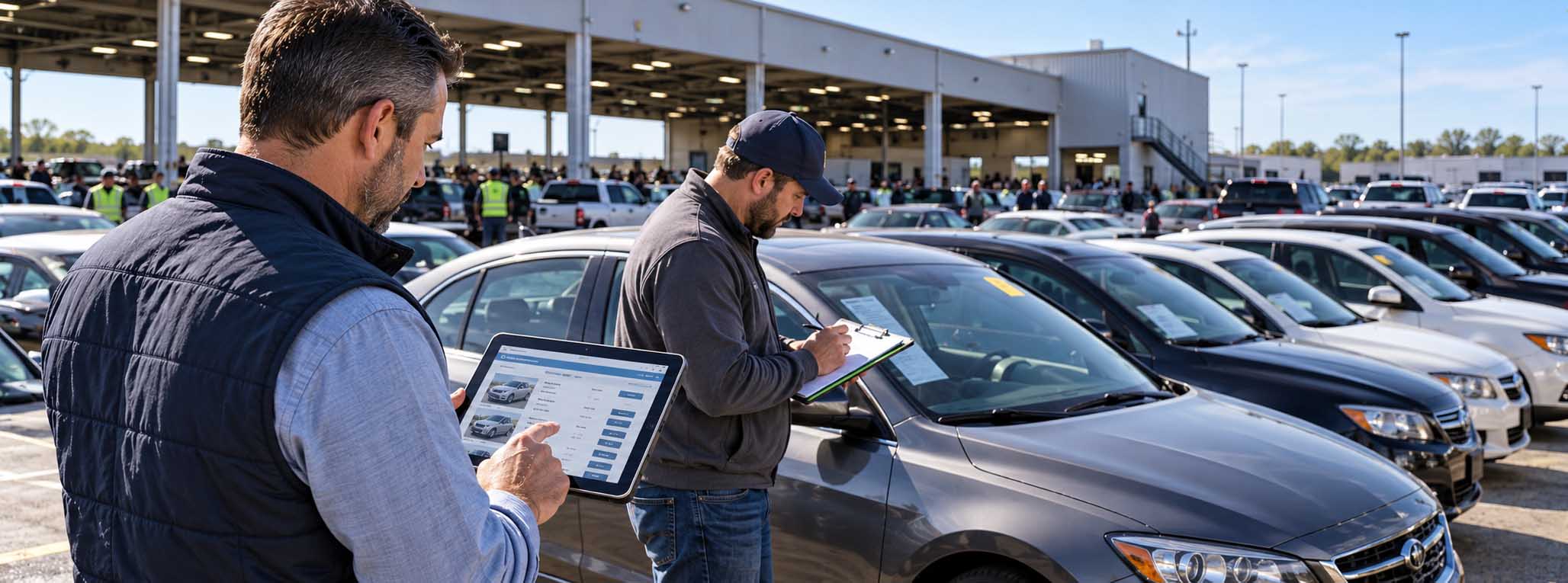
Understanding independent car dealer inventory sourcing is essential for running a profitable used-car dealership.
Wholesale automotive auctions are one of these channels. They allow eligible dealerships to evaluate and purchase vehicles offered by other dealers, fleet operators, financial institutions, and additional sellers.
However, successful inventory sourcing involves more than finding vehicles at attractive prices. Dealers must evaluate local demand, acquisition expenses, mechanical condition, and expected resale potential.
Therefore, a disciplined purchasing strategy helps dealerships maintain inventory that matches customer needs while controlling financial risk.
How Independent Car Dealers Source Inventory Through Auctions
How Independent Car Dealer Inventory Is Sourced Through Auctions
Wholesale auctions are particularly relevant because they bring together automotive businesses seeking to sell or acquire inventory.
Dealer-Only Wholesale Auctions
Dealer-only auctions generally require participating businesses to hold appropriate automotive dealer credentials.
These auctions may feature vehicles from franchise dealerships, independent dealers, rental fleets, and other commercial sources.
Dealers can review available inventory and bid on vehicles that match their purchasing requirements.
However, participation rules, fees, and inspection procedures vary between auction operators.
Online Automotive Auctions for Independent Dealers
Online auction platforms allow eligible buyers to research available vehicles without attending every sale in person.
Depending on the provider, dealers may be able to review photographs, vehicle descriptions, inspection information, and bidding terms remotely.
Nevertheless, online availability does not automatically mean that every auction accepts licensed dealers or provides wholesale inventory.
Therefore, dealerships should verify each platform’s business model and participation requirements before registering.
How Independent Car Dealers Find Inventory at Wholesale Auctions
Wholesale auctions can help dealerships access inventory beyond their immediate local market.
For example, a small dealership specializing in affordable commuter vehicles may need additional sourcing options when local trade-in supply becomes limited.
Auctions can provide opportunities to evaluate vehicles from different sellers and geographic locations.
However, broader inventory access also introduces transportation expenses and additional research requirements.
As a result, dealerships should treat auctions as one part of a diversified acquisition strategy rather than relying exclusively on a single source.
How Independent Car Dealers Choose Inventory
Purchasing decisions should begin with understanding customer demand.
A dealership serving budget-conscious commuters may prioritize reliable compact cars and midsize sedans.
Meanwhile, a dealership operating in an area with strong demand for work vehicles may focus on pickup trucks and commercial vans.
Research Local Market Demand
Dealers can study comparable retail listings, recent sales performance, and customer inquiries.
This information helps identify vehicle categories that are likely to attract buyers.
However, demand alone does not guarantee profitability.
Dealerships must also consider acquisition costs and the condition of available vehicles.
Evaluate Vehicle Condition Before Purchasing
Before bidding, dealers should review available inspection reports, photographs, mileage records, and title information.
Mechanical problems can reduce potential profit through unexpected repair expenses.
Likewise, a vehicle with a branded title may face different resale and financing considerations.
When possible, independent inspections provide additional information about a vehicle’s actual condition.
In addition, dealerships should consider their retail disclosure obligations. The Federal Trade Commission’s Used Car Rule explains federal requirements that apply to many dealers selling used vehicles, including the Buyers Guide.
How Independent Dealers Source Inventory Online
Online research can support dealership inventory planning by helping buyers identify potential acquisition channels and compare available vehicle information.
For example, a dealer researching wholesale vehicle sourcing should first confirm the website’s current business identity, inventory availability, and dealer participation rules before treating it as a suitable purchasing channel.
Dealers should also verify whether the platform provides relevant documentation, inspection opportunities, and clear transaction procedures.
These checks are particularly important when evaluating unfamiliar online auction providers.
Therefore, a professional purchasing process depends on verified information rather than assumptions about a platform’s services.
Compare Multiple Inventory Sources
Dealers can evaluate auction listings alongside trade-in opportunities, direct purchases, and other wholesale channels.
For example, a local trade-in may have a higher initial price but lower transportation expenses than a vehicle purchased from a distant auction.
Similarly, an auction vehicle may offer a competitive acquisition price but require additional reconditioning.
Comparing the complete costs of each option helps dealerships identify more suitable inventory opportunities.
Calculating Inventory Sourcing Costs for Independent Car Dealers
Managing independent car dealer inventory costs requires looking beyond the winning auction bid.
The winning bid represents only one component of a dealership’s total vehicle acquisition cost.
Additional expenses may include:
- Auction buyer fees
- Transportation charges
- Mechanical repairs
- Detailing and reconditioning
- Title and administrative expenses
- Inventory financing costs
Together, these expenses affect the amount a dealership can reasonably pay.
Example of a Wholesale Vehicle Purchase
Consider a dealership evaluating a used sedan with an expected retail selling price of $14,500.
Its estimated expenses are:
| Expense | Estimated Amount |
|---|---|
| Auction purchase price | $10,000 |
| Auction fees | $450 |
| Transportation | $300 |
| Repairs and reconditioning | $850 |
| Total acquisition cost | $11,600 |
In this hypothetical example, the difference between the expected selling price and acquisition cost is $2,900.
However, this is not the dealership’s net profit.
Operating expenses, advertising, financing, employee costs, and other business expenses must also be considered.
Therefore, dealers should calculate realistic margins before placing bids.
Set a Maximum Acquisition Budget
Before attending an auction, dealers should establish the highest purchase price that supports their expected resale margin.
First, estimate a realistic retail selling price based on comparable vehicles.
Next, subtract expected auction fees, transportation, reconditioning expenses, and other acquisition costs.
Finally, allow room for operating expenses, uncertainty, and the dealership’s required profit.
This approach helps prevent competitive bidding from undermining the financial value of a purchase.
How Independent Car Dealers Manage Inventory and Cash Flow
Inventory turnover measures how quickly a dealership sells and replaces its vehicle stock.
Vehicles that remain unsold for extended periods can tie up working capital.
In addition, financing expenses, depreciation, and ongoing maintenance may reduce profitability.
Avoid Overbuying Slow-Moving Vehicles
A vehicle may appear attractive because of its low auction price.
However, if local customers have limited interest in that model, it may remain on the lot longer than expected.
Therefore, dealers should evaluate expected demand alongside acquisition cost.
Maintain a Balanced Inventory
A balanced inventory reflects the dealership’s target customers and financial resources.
For example, a dealership may carry several affordable commuter vehicles alongside a smaller selection of higher-priced models.
The appropriate mix depends on local demand, available capital, and historical sales performance.
As a result, inventory planning should reflect actual sales patterns rather than purchasing opportunities alone.
Common Mistakes in Independent Dealer Inventory Sourcing
Independent dealers can reduce purchasing risk by avoiding several common mistakes.
- Bidding without a maximum acquisition budget: Competitive bidding can eliminate expected resale margins.
- Ignoring reconditioning expenses: Repairs and preparation costs may exceed initial estimates.
- Purchasing unfamiliar vehicle models: Limited knowledge of repair costs and local demand can increase uncertainty.
- Relying on one inventory source: Supply disruptions may affect purchasing opportunities.
- Overlooking transportation costs: Long-distance purchases can become less attractive after delivery expenses.
- Ignoring inventory age: Slow-moving vehicles can weaken cash flow and reduce financial flexibility.
For these reasons, a consistent evaluation process helps dealerships make more disciplined acquisition decisions.
Frequently Asked Questions About Dealer Inventory Sourcing
Do Independent Car Dealers Need a License to Buy at Wholesale Auctions?
Dealer-only auctions generally require appropriate dealer licensing or other approved credentials.
However, specific eligibility requirements depend on the auction provider and applicable state regulations.
Can Small Dealerships Compete at Wholesale Auctions?
Yes. Eligible independent dealerships can participate in auctions that accept their credentials.
Nevertheless, successful purchasing requires careful budgeting and knowledge of vehicle values.
Are Wholesale Auction Vehicles Always Cheaper?
Not necessarily. Competitive bidding, vehicle condition, auction fees, and transportation expenses influence the final acquisition cost.
Therefore, dealers should compare total acquisition costs rather than focusing only on winning bids.
How Do Dealers Decide Which Cars to Buy?
Dealers typically consider customer demand, market value, mechanical condition, expected reconditioning expenses, and potential resale margins.
In addition, historical sales performance can help identify vehicles that fit the dealership’s inventory strategy.
Final Thoughts on How Independent Car Dealers Source Inventory
Understanding how independent car dealers source inventory helps explain the relationship between wholesale purchasing, dealership profitability, and inventory management.
Automotive auctions can provide useful acquisition opportunities. However, successful dealers evaluate each vehicle according to customer demand, total acquisition cost, and expected resale potential.
By combining market research, disciplined bidding, condition assessments, and inventory turnover planning, independent dealerships can develop a more sustainable vehicle sourcing strategy.
The objective is not simply to purchase more vehicles. Instead, it is to acquire the right inventory at costs that support healthy business operations and long-term customer satisfaction.
Effective independent car dealer inventory management connects wholesale purchasing, dealership profitability, and inventory turnover.