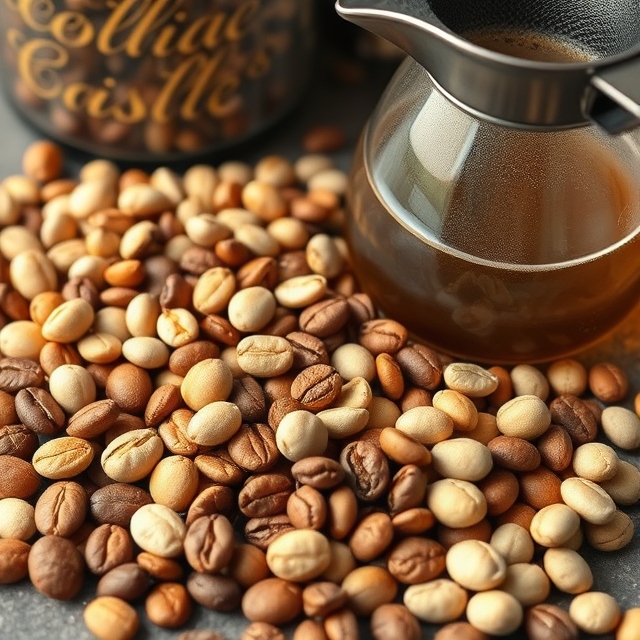
Green coffee vs white coffee is essentially a comparison between unroasted coffee beans and beans that have received an exceptionally light roast. Both can look very different from the familiar brown beans found in supermarkets, but the key distinction is that white coffee has undergone roasting while green coffee has not.
That difference affects the bean’s color, structure, aroma, flavor, density, and suitability for different preparation methods.
What Is Green Coffee?
Green coffee refers to coffee beans that have been processed after harvesting but have not yet been roasted.
After coffee cherries are harvested, the fruit is removed through processing methods such as washed, natural, or honey processing. The resulting coffee seeds are then dried and prepared for storage, transportation, and eventually roasting.
At this stage, the beans are generally green to yellow-green rather than brown. They are dense and firm, and they do not have the familiar roasted coffee aroma that develops after heating.
Green coffee is therefore not simply a very light roast. It is coffee before the roasting stage.
What Is White Coffee?
White coffee is generally coffee that has been roasted to an exceptionally light level. Unlike green coffee, it has undergone thermal processing, but the roast development is much less extensive than that of conventional coffee.
The beans can remain unusually pale and dense. Their physical properties may also make them harder to grind than ordinary roasted beans.
This distinction is important: green coffee is unroasted, while white coffee is roasted but minimally developed.
Green Coffee vs White Coffee: The Main Difference
The simplest way to understand the difference is to place the two at different points in the coffee-processing journey.
Green coffee comes before roasting. White coffee comes after a limited roasting process.
| Characteristic | Green Coffee | White Coffee |
|---|---|---|
| Roasting | None | Extremely light |
| Appearance | Green to yellow-green | Pale yellow to very light brown |
| Aroma | Vegetal or raw | Light roasted aroma |
| Structure | Dense and hard | Dense and hard compared with darker roasts |
| Flavor | Raw, vegetal, and unsuitable for typical brewed coffee | Nutty, mild, grain-like, or otherwise unusual depending on the bean |
| Typical preparation | Primarily a roasting input | Can be brewed after appropriate grinding |
| Roast development | None | Very limited |
The table provides a general comparison, but actual appearance and flavor can vary with bean origin, processing, and roasting technique.
What Does Roasting Change?
Roasting transforms green coffee through heat. As the temperature rises, the beans undergo physical and chemical changes that affect their structure and sensory characteristics.
One important stage is the development of pressure inside the beans as moisture turns into vapor and gases form. Eventually, the beans undergo the cracking sounds associated with roast development.
As roasting continues, the beans become more brittle, expand, darken, and develop the aromas associated with roasted coffee.
White coffee receives much less roast development than conventional medium or dark coffee. As a result, many of the dramatic physical changes associated with extended roasting are less pronounced.
Why Are White Coffee Beans Still So Dense?
Roasting changes the internal structure of coffee beans. More developed roasting generally makes the beans more brittle and easier to break apart.
Because white coffee receives limited roast development, it can retain a particularly dense and hard structure.
This has a practical consequence: grinding can be more demanding.
A basic household grinder may not be ideal for exceptionally hard beans. Some people therefore choose pre-ground white coffee, particularly when their equipment is not designed to handle unusually dense coffee.
How Does Flavor Change From Green to White Coffee?
Green coffee does not taste like ordinary brewed coffee because it has not undergone the chemical transformations responsible for familiar roasted coffee flavors.
Unroasted beans can have raw, vegetal, grassy, or other unusual characteristics. They are primarily intended to be roasted before conventional coffee preparation.
White coffee is different because roasting has already begun developing the beans. The result can be much more recognizable as coffee while still having a distinctive flavor profile.
Depending on the beans and preparation, very lightly roasted coffee can show nutty, mild, grain-like, earthy, or tea-like characteristics. It may also have considerably less of the deep roasted character associated with dark coffee.
For a closer look at this unusual end of the roast spectrum, white roast coffee beans can serve as an example of coffee that has been roasted far less extensively than conventional dark beans.
Does White Coffee Count as a Light Roast?
White coffee is generally considered an exceptionally light roast, but the terminology can vary.
“Light roast” is a broad category that can include several different degrees of roast development. White coffee sits toward the extreme end of that range, with a noticeably paler appearance and distinctive physical characteristics.
Therefore, every white coffee can reasonably be discussed in terms of very light roasting, but not every coffee marketed as a light roast will have the same appearance or density as white coffee.
What Happens During Brewing?
Once white coffee has been appropriately ground, it can be prepared using several familiar brewing methods.
Drip coffee makers, espresso machines, French presses, and other brewing systems can all be used depending on the product and grind.
However, brewing parameters may need adjustment. Grind size, water temperature, contact time, and brew ratio influence extraction, and unusually light-roasted coffee can respond differently from darker beans.
The important point is that roasting and brewing are separate processes. Roasting determines much of the bean’s physical and chemical character, while brewing determines how soluble compounds are extracted into the final drink.
Is Green Coffee the Same as White Coffee?
No. Green coffee and white coffee are not the same stage of processing.
Green coffee has not been roasted. White coffee has undergone an exceptionally light roast.
This difference affects everything from aroma and flavor to grinding and brewing behavior. Calling green coffee “white coffee” would therefore create confusion about how the beans were processed.
Why the Distinction Matters
Understanding green coffee vs white coffee helps explain why roast level is more than a matter of bean color.
Green coffee represents the starting material for roasting. White coffee represents a deliberate decision to roast that material only lightly, preserving a different combination of physical and sensory characteristics.
Once this distinction is clear, terms such as green coffee, white coffee, light roast, and dark roast become easier to understand. Each describes a different point or style within the journey from harvested coffee seed to brewed beverage.